Since Ethereum Name Service, or ENS, released 10,000 four-digit .eth domains ranging from 0000 to 9999, the nonfungible token collection has caused a stir among NFT investors, speculators and enthusiasts alike. After all 10,000 ENS names sold out in one day, the number of people registering for ENS names and purchasing these digit number names on secondary markets has significantly affected the market’s trading volume.
According to a Dune Analytics dashboard for ENS, the spike in sales began on April 21, and the number of eth. name registrations has since jumped from 2,721 to 21,188 by April 28. Over the last seven-day period, ENS domains’ trading volume on OpenSea climbed by 3,333% to 2,613 ETH, or $7.3 million, at the time of writing. The last 48 hours have seen the most ENS NFT trading in the secondary market with the most expensive domain so far, “008.eth,” selling for 20 ETH, or $56,125, on April 29.
Each ENS web name is an NFT that is minted and sold like any other nonfungible token. These decentralized domains that end in .eth can act like Ethereum wallet addresses, cryptographic hashes and website URLs. As decentralized applications, wallets, exchanges and marketplaces increasingly support NFT usernames, whether from ENS or from competitors like Unstoppable Domains, Web3 users are embracing the value that can be tied to a digital identity.
Holders who have scooped up ENS names from 0-9999 have formed an exclusive Discord channel called the 10kClub. At the time of writing, nearly 4,000 ENS holders had joined this social club. Members even created a refrain that was continuously posted throughout the Discord chat stating, “IAM MY NUMBERS AND MY NUMBERS ARE ME.” According to the 10kClub Twitter page, there is no roadmap.
Consequentially, the app.ens.domains website has been crashing this past week and leading users to a 404 error page because the website couldn’t be found on the server. On April 29, the ENS team tweeted multiple times that they are working to resolve the issue.
Music is a tricky business. The industry has its fair share of controversies, from monopolies to the limited earning potential for upcoming artists. While Web2 brought many positive changes, the industry still has a long way. Because of this, projects are trying to utilize blockchain technology to provide new solutions to the age-old music market.
In the last ten years, the industry has changed drastically because of the internet and social media development. Artists have new mediums to share their songs, and fans have many new ways to engage with and support their favorite musicians.
However, like most things within the Web2 sphere, a select few own the assets in the industry, and large corporations profit more than the users and artists. While they are still in their early stages, some blockchain projects are trying to take a shot at changing the industry from within.
Bringing fair payment to musicians
Tune.FM, a platform powered by Hedera Hashgraph, claims to be able to give musicians 90% of music streaming revenue, which is approximately ten times more than stream earnings on mainstream services. Artists can earn digital tokens every time their music is streamed within the platform.
In an announcement, Andrew Antar, the co-founder of Tune.FM pointed out that there were many independent musicians that suffered after the pandemic. “With the likes of Spotify not paying them fairly, many were struggling to get by. We are the antidote for the millions of creatives that are not being paid fairly by the big streaming services,” Antar said.
Allowing fans to co-own songs
Andreessen Horowitz-backed music marketplace Royal continues to let fans have shared ownership of songs from their favorite artists through nonfungible tokens (NFT). After dropping NFTs for prominent rapper Nas, the platform recently released tokens for American DJ and songwriter Diplo.
American rapper Nas with his daughter Destiny Jones. Source: fromthestage.net
In a blog announcing the Diplo drop, Royal co-founder Justin Blau wrote that the platform’s aim is to “empower artists to maintain control over their work” while providing fuel for their careers. Blau also believes that by co-owning music, fans “establish a deeper connection” and help them be independent when it comes to creativity.
Powering music collaboration through NFTs
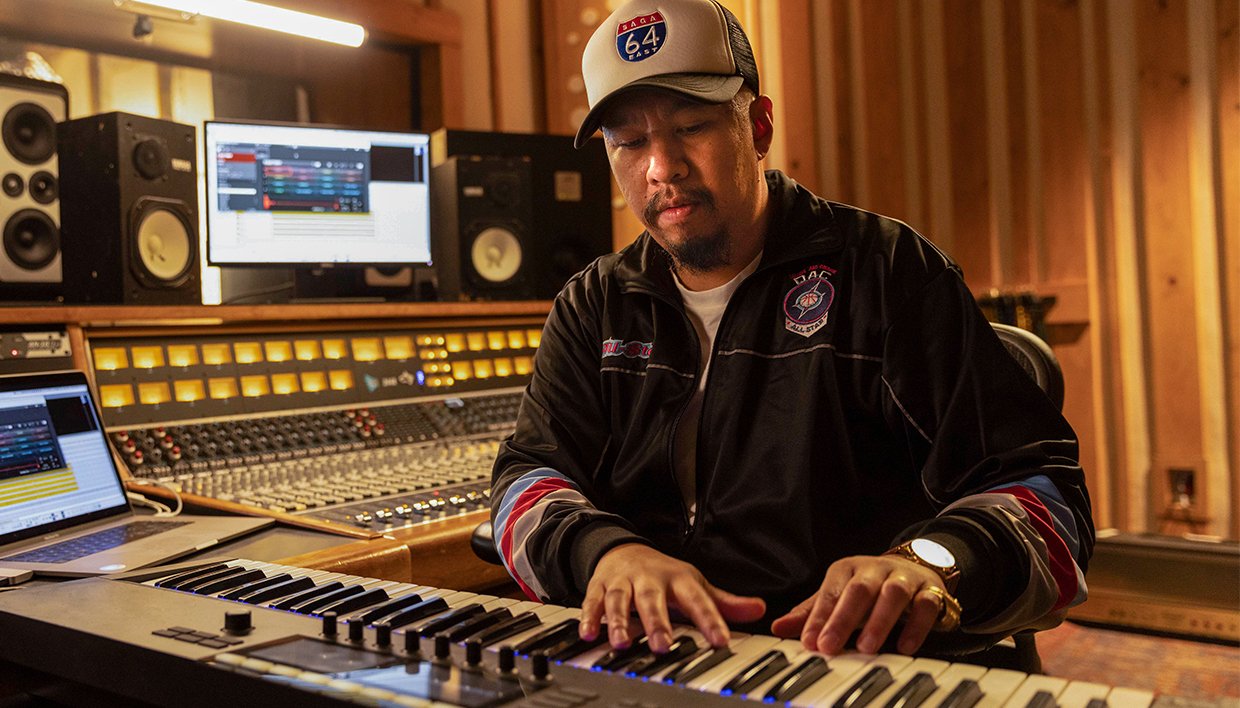
A project called Squad of Knights lets its NFT owners form six-person squads, with each person assigned their own roles in the music production process. Unlike working with traditional music labels, the platform lets its community members own 100% of the music they produce.
Music producer Illmind on his studio. Source: native-instruments.com
Founder and award-winning record producer Ramon ‘Illmind’ Ibanga Jr. said, “Finding people to work with is tough. Finding the right people to work with is even tougher.” He noted that the project’s goal is to bring producers, engineers, music artists, and managers together, both within the real world and the metaverse.
Solana-based streaming platform Audius provides an array of decentralized audio files to the metaverse. The platform works with metaverses like the Portals Metaverse to give music to their users. Due to its decentralized nature, Audius allows anyone to pull content from the platform and use it when building their own projects.
In a Cointelegraph interview, Roneil Rumburg, the CEO and co-founder of Audius, said that the platform is a “decentralized repository of content with clearly defined rights so third-party developers can pull from the platform’s catalog without any issues.”
Goldman Sachs has offered its first Bitcoin-backed loan, in a major step forward for institutional cryptocurrency adoption on Wall St.
A spokeswoman from Goldman told Bloomberg that the multinational investment bank had lent cash collateralized by Bitcoin (BTC) owned by the borrower for the first time in Goldman Sachs’ history. She added that the deal was particularly interesting because of its structure and 24-hour risk management.
Such a loan allows for a Bitcoin holder to borrow fiat currency such as the US dollar, by fronting up their BTC as collateral to the bank. The underlying volatility of Bitcoin can make these loans risky — if the price of bitcoin drops too far the borrower may be required to increase their collateral, otherwise they risk getting liquidated.
While overcollateralized crypto-backed loans have been a staple in the world of decentralized finance (DeFi) for some time — the crypto-collateralized loan is becoming an alternative method for institutions and governments looking to gain increased access to capital.
Yesterday, blockchain real estate platform Propy announced a partnership with Abra to offer its customers access to home loans using cryptocurrency holdings as collateral. On Wednesday, a new homeowner purchased an apartment in Austin, Texas, using a platform called USDC.homes. The deposit was staked crypto, and the mortgage was undercollateralized and based on the applicants credit score.
Blockchain real estate platform Propy has partnered with Abra to allow customers to obtain home loans using their cryptocurrency holdings, potentially widening the financial use cases of digital assets.
Propy customers can now put up digital assets as collateral for their real estate purchases through Abra Borrow, a cryptocurrency lending and borrowing service. Crypto collateral pledged on Abra is used to borrow United States dollars that can then be applied to home purchases.
The Propy blockchain records the entire transaction process, serving as the technical and legal framework for buyers and sellers. According to Propy, the blockchain records the transaction whether it’s made in crypto, nonfungible tokens (NFT) or traditional fiat currency.
Abra is a crypto-focused wealth management platform that has been around since 2014. The platform allows users to generate yield on their crypto, borrow dollars against their holdings and trade digital assets. Abra has received backing from several major companies, including Amex Ventures, the venture capital arm of American Express, which contributed to its $55 million Series C funding round in September 2021.
While early crypto investors have generated significant wealth over the years, their access to traditional financial products such as mortgages remains limited. Decentralized finance, or DeFi, applications are attempting to fill the void. As Cointelegraph reported, a new homeowner in Austin, Texas recently purchased property through a mortgage obtained from USDC.homes, a crypto loan service based on Circle’s USD Coin (USDC).
If you’re buying a home in the future, you’ll probably be using NFTs. Here’s how crypto is changing real estate in the meantime. https://t.co/jiLT9Uojvd
Fintech startup Milo is also offering crypto mortgages to homebuyers wishing to use their Bitcoin (BTC) as collateral. Meanwhile, decentralized mortgage lender Bacon Protocol launched a program in September 2021 that allows homeowners to exchange a lien on their property for an NFT that represents a percentage of the property they bought.
You’ll never have an excuse to miss another governance vote if the decentralized autonomous organization (DAO) calls or texts to badger you to vote.
The Notifi Network is banking on this concept to help improve abysmal participation rates in governance votes. Launching with Solana DAOs, it combines popular centralized methods used by the Web3 community such as Telegram and Discord pings with more traditional, and harder to ignore notifications like phone calls, text messages or emails.
Backed by crypto venture capital firms Race Capital and Hashed, on April 24 Notifi applied its notification service to all DAOs that launch on the Solana Realms DAO platform.
Notifi founder Paul Kim told Cointelegraph that his project’s mission is simple:
“We want to promote communities to be more active. You bought the tokens, so you should use them.”
As it stands, chat rooms on Telegram and Discord are among the most common ways DAO participants stay in touch with the project. However, Kim feels this method is inefficient as he said “most users keep their crypto chats muted due to the high volume of messages.”
This makes it hard for users to know when new proposals have been made in time to make a vote.
Kim hopes to turn the tide on low participation by allowing DAO participants on Realms to choose various ways they can be notified when a governance proposal has been issued. These notifications could start with Telegram or Discord direct messages, but Kim said they can be “escalated” to email, text messages, and even a phone call if they do not initially respond.
Although email, SMS, and especially phone calls are not common means of communication in the Web3 world, Kim believes they should serve a very important function for DAOs.
“For some reason we just skipped around email from Web2 when we leaped into Web3. Can we challenge the paradigms of Web3 by using Web2 primitives?”
There is clearly a problem with voter participation on Solana DAOs. According to data from DAO tracker DeepDAO, fewer than 1% of governance token holders on Solana’s top three DAOs — UXDProtocol (UXP), Mango DAO (MNGO), and Serum (SRM) — are active members. There are 500 DAOs on Realms with a collective treasury value of $1.5 billion according to Kim.
In an Apr 24 blog post by Notifi, Solana Labs DAO Software Engineer Sebastian Bor agreed that notification services are currently not pulling their weight for DAOs. He stated, “Notifications are an integral part of informing community members about DAO activity.”
Eventually, Kim said his service “could be used for all on-chain activity including trades and airdrops, sells, and liquidation alerts.” However, for now “Realms is the proving ground” to figure out if his solution can enable users to step away from their keyboard:
“We’re eager to see what the data shows us and what trends actually exist about messaging platform utilization.”
The British overseas territory of Gibraltar introduced a new regulatory package for distributed ledger technology (DLT) service providers. The document elaborates on the responsibilities of crypto businesses in regards to threats of market manipulation and insider trading.
On April 27, the government of Gibraltar published the 10th Regulatory Principle of the country’s financial services regulation. The details are revealed in a Guidance Note, provided by the Gibraltar Financial Services Commission (GFSC), the chief finance regulator of the territory.
The regulation, crafted by a special working group that included both government officials and industry experts, sets operational guidelines for preventing market abuse. DLT providers are expected to monitor the movement of significant virtual asset holdings, publication of information that could be aimed at generating false or misleading market signals, and to investigate whether algorithmic-based systems are being used to generate deceptive data around transaction volumes.
The regulation also requires crypto companies to seek and prevent any insider trading activities and to inform the public of any relevant information “as soon as possible.” Proposed trading standards also include putting in place measures to reduce the liquidity providers and market makers’ capacity to significantly alter asset prices.
Albert Isola, Gibraltar’s Minister for Digital and Financial Services, expressed his confidence that the introduced measures will help the jurisdiction maintain its already strong relationship with the crypto sector. Isola commented to Cointelegraph:
“The introduction of the 10th Principle, with a significant input from industry, will develop further our regulatory framework. It provides permissioned firms with clear guidance on the standards that are required of them as well as providing consumer and jurisdictional protection.”
One of the leaders of the working group, fintech lawyer Joey Garcia, commended Gibraltar’s push to comply with FATF recommendations:
“It is great to see […] Gibraltar lead in setting standards, particularly when the FATF has cited market integrity and prudential requirements as factors that jurisdictions should consider when developing regulatory requirements for the space.”
In a Monday Twitter post, OpenSea announced it had acquired NFT marketplace aggregator Gem for an undisclosed price. A blog post by OpenSea chief executive officer Devin Finzer stated that the company made this move to improve the experience of its more seasoned, “pro” users.
Gem lets traders buy NFTs across various collections and multiple marketplaces in a single transaction that saves on gas fees. For now, OpenSea is adding popular Gem features such as its collection floor price sweeping tool, and rarity-based rankings to its platform.
Gem will continue operating independently from OpenSea as a stand-alone product, but OpenSea intends to continually integrate more Gem features into its NFT marketplace in the future.
Many of the user comments on the Twitter thread, however, criticized OpenSea’s latest move. Amid multiple hacks and recent phishing scandals, collectors like @BandoNFT said he’d rather OpenSea invest to “improve communication and customer service.”
1/ Exciting news!
To invest in the “pro” community and continue improving the OpenSea experience, we’re excited to share that we’ve acquired @gemxyz !
Rae is one of Asia’s CGI (computer generated imagery) influencers, many of whom have large followings on Instagram and Weibo. Known as “here.is.rae” on social media, her Instagram bio states that she is a virtual being, digital artist and STEM (Science, Technology, Engineering, and Maths) advocate.
Rae announced her upcoming second NFT collection ahead of the United Nations-recognized International Girls in ICT Day on April 28 (information and communication technology.) The virtual influencer intends to use this collection to advocate for better STEM education for young girls. Eight percent of the total sale proceeds and royalty fees will go to a non-profit organization called United Women Singapore.
The collection called “Adventures of Tako” features Rae’s virtual pet named Tako. NFT holders of the first out of three series will receive an audio message from Rae and gain priority access to the launch of the second series of the collection.
Wyre, a fiat-to-crypto and payment infrastructure firm, partnered up with the online chess community Chess.com to launch a new NFT marketplace called Treasure Chess. The platform allows users to turn a chess game played on treasure.chess.com into a Treasure NFT. Users can then purchase, sell, mint and collect their “Treasures” on the Layer 2 blockchain Polygon.
Treasure Chess generates an Ethereum Address for users who sign in with their Chess.com accounts. Wyre permits players to usedebit cards to buy the stablecoin USD Coin (USDC) in order to buy NFTs, without having to have a separate wallet. Labeled an experiment, Chess.com stated that the mission is to make users’ chess experience richer and support chess streamers and content creators in celebrating their favorite matches.
We are excited to announce our integration, and official launch of @treasurechess_, a groundbreaking #NFT marketplace built in collaboration with @chesscom!
Every chess game is one-of-a-kind. Our collaboration makes yours a collectible!♟️ pic.twitter.com/XM7nhuVFab
The recently launched owl avatars Moonbirds NFT collection is bringing new liquidity to the NFT market, according to Cointelegraph market analyst Alyssa Exposito. So much so that The Sandbox metaverse purchased MoonBird #2642 for 350 Ether (ETH), or about $1 million, which was originally purchased for 100 ETH. At the time of publication, Moonbirds had generated 117,115 ETH in volume or slightly over $332 million in sales on OpenSea in a ten-day run.
Another NFT collection with a soaring market cap is Bored Ape Yacht Club, or BAYC, ahead of Yuga Labs’ The Otherside metaverse land sale. On April 25, BAYC suffered a phishing attack that coincided with the one-year anniversary of its launch. Hackers breached BAYC’s official Instagram page and shared links to a fake airdrop.
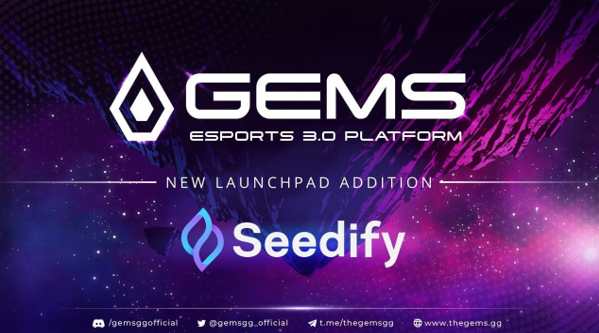
[HONG KONG, April 22, 2022] – Looking into the second quarter of 2022, GEMS is excited to announce its next great step. We will be launching on three launchpads in the coming weeks, including Seedify, a blockchain gaming-focused incubator and launchpad ecosystem.
GEMS, the combination of GameFi, Esports, Metaverse and SocialFi, is an Esports 3.0 aggregator platform within an online-to-offline ecosystem. The core business pillars of GEMS comprise a NFT marketplace (with NFT rental options), a Fanfi studio, a DAO Guild and a competitive pools arena, which means GEMS is a one-stop destination for all gamers that integrates the young population into the new sharing economy. In the age of Esports 3.0, just like Web 3.0 where people can not only read and write but also own the content, players will be empowered to own digital assets through the use of blockchain and NFT.
Having successfully raised 5,000,000 USDT with the support of over 45 partners and the GameFi alliance with Project Seed, FOTA, DreamQuest (and the list goes on), GEMS is excited to secure a spot on top launchpads, which allows GEMS to recruit more early adopters to learn about GEMS Esports 3.0 platform. Given these conditions, GEMS is ready to take off in the second quarter of this year.
With everything ready, GEMS is thrilled to announce that we will use Seedify as one of the launchpads, along with two others, PolkaBridge and DuckStarter.
Seedify
A highly respected blockchain gaming-focused incubator and launchpad ecosystem, empowering innovators and project developers through access to funding, community and partnership building, and a full support system to drive the future of gaming blockchain.
PolkaBridge
A leading launchpad with a decentralised finance platform that is powered by the ecosystem with advanced functions for all-in-one financial applications for launching new games.
DuckStarter
A launchpad for blockchain-based NFT gaming platform with dynamic NFTs gaming and blockchain technology.
“We are honored to launch on Seedify, PolkaBridge and DuckStarter,” Andy Koh, CEO of GEMS said. “The goal of GEMS is to bring GameFi players into the new sharing economy of Esports 3.0 ecosystem, which is the dream of both traditional and blockchain gamers to acquire NFTs at a lower cost and interact with other players in a more transparent and secured funding pool. The launch will lead GEMS’ blockchain gamers to join the wider community and grow massively.”
Now is the time to get involved on GEMS for token launch and get involved in a 360-degree O2O immersive GameFi and Esports experience.
GEMS stands for GameFi, Esports, Metaverse and SocialFi.
Proudly presenting Esports 3.0, GEMS is an Esports 3.0 Aggregator Platform within a unique O2O (online-to-offline) Ecosystem. Our one-of-a-kind ecosystem is designed to be the ultimate, one-stop GameFi destination, allowing crypto and Esports gamers to learn, connect, and immerse themselves in different metaverses and GameFi worlds via online and offline touchpoints.
Crypto tax calculation platform Koinly added Terra (LUNA) wallet support to make tax calculation easier for LUNA holders as the Canadian tax report deadline draws near.
Tony Dhanjal, head of tax at Koinly, said that LUNA support has been requested by many Koinly users, and with the integration, LUNA users will have a “way to accurately track and record their transactions to meet their tax obligations.”
Calculating crypto tax is easy if a user’s crypto affairs are simple. However, Dhanjal told Cointelegraph that “the average crypto investor is connected to 3 to 5 exchanges, wallets or blockchains.” Because of this, working out the taxes using these sources is very difficult and the risks of errors are high. This is why Dhanjal recommends the use of a simple crypto tax calculation tool.
Apart from this, Dhanjal emphasizes the importance of paying crypto taxes. While the process varies, most countries require crypto tax to be reported. The tax expert encourages people to pay not only their crypto taxes but any other tax that they are liable for as an individual or a business. Dhanjal explained that:
“Ignorance is not a valid excuse, and there could be a fine line between this and tax evasion, which is illegal […] The penalties for tax evasion can be severe, not to mention the reputational and other damage to you or your business, this could cause.”
In a Cointelegraph interview, EY crypto tax executive Thomas Shea reminded people that buying crypto with fiat or any unrealized gains is not a taxable event. Shea also said that the same applies to nonfungible tokens.
Meanwhile, crypto projects based in India recently shared plans to move to more crypto-friendly jurisdictions because of India’s crypto tax law that imposes a 30% crypto tax on holding and transferring digital assets.
Miami Tech Week took place last week in the South Florida city as part of April’s Tech Month programming, which also included NFT Miami and the Bitcoin 2022 conference earlier in the month. Tech Week kicked off with the eMerge Americas conference and the myriad of panel discussions scheduled throughout the city that followed.
Cointelegraph gathered some key insights from thought leaders who participated, and the two main themes are Miami as a hot spot for crypto folks, and crypto as a disruptor of the investment landscape.
eMerge Americas is a venture-backed organization with a mission to position Miami as the tech hub of North and South America. Its signature event since 2014 has been the annual tech conference, which features a startup pitch competition. After a two-year hiatus, it returned to the Miami Beach Convention Center on April 18-19 with web3, crypto and NFT content. The crypto trading platform Blockchain.com was the 2022 title sponsor.
Peter Smith, Blockchain.com’s chief executive officer and co-founder, sat on an eMerge panel to discuss the state of the crypto market. Afterwards he expanded on his bullish outlook when he told CNBC that he expects “crypto assets to rebound much faster than tech stocks and growth stocks” amid a current downtown in the market.
Blockchain.com claims that it is the first crypto company to move its headquarters to Miami. Smith even tweeted out some reasons for that move on Thursday. His main motive was a “vibe” of genuine love of crypto from Miami’s residents.
Reason 1: #Miami loves #Crypto. Not just Mayor @FrancisSuarez and local leadership, but actual people in Miami. Walking around the city, you find more people than anywhere else who are genuinely into building the next financial system, vs the last one (NYC)
Another eMerge speaker was Melinda Delis, Director of Business Development at Gemini. During her panel about “Business Applications for Emerging Technologies” like NFTs, she revealed her clients’ main concerns when it comes to the Metaverse:“Custody. For these businesses to meet the standards of their internal risk and compliance teams, they need to check what is the security of the custodian, what are the controls around it, and how is it regulated.”
Regulation is a topic that Ripple’s chief executive officer, Brad Garlinghouse, had strong opinions on. During a panel programming at the Faena Forum Miami Beach on Friday, Garlinghouse mentioned on stage that Ripple (XRP) is currently in a lawsuit with Securities and Exchange Commission, or SEC, which alleges that Ripple conducted an illegal securities offering through sales of XRP. Ripple argues XRP should be treated as a virtual currency rather than as a stock.
Garlinghouse advised audience members to “not incorporate a company in the U.S.” because the country “has been and continues to fall behind in terms of regulatory clarity. And investors don’t want to put money into uncertainty.” He even tweeted about his experience later that day.
The SEC seems perfectly content to let the US fall further behind – all in the name of protecting their own jurisdiction at the expense of US citizens. Politics over policy is good for no one. We need a clear regulatory framework now.
Sitting next to Garlinghouse was Ivan Soto-Wright, co-founder and chief executive officer of MoonPay, the Miami-based crypto payment platform. When the moderator, Coinbase’s head of business operations and strategy Marc Bhargava, asked about the future of NFTs, Soto-Wright stated that “NFTs have now overtaken crypto.”
He pointed to companies like Yuga Labs and CryptoPunks that have been able to monetize their brand value by “turning its intellectual property into a number on the income statement.” The next big wave of NFTs, he said, will be from major Web2 brands that “will monetize their legacy via NFTs.”
He added that the process of purchasing an NFT, however, may still be a complicated process for the average “mom.” Even though Web3 promises decentralization, it’s still “at the cost of user experience,” and that streamlining peer-to-peer payments via wallets is the key to getting more people into crypto, according to Soto-Wright.
From left, Marc Bhargava, Ivan Soto-Wright, Natalia Karayaneva and Brad Garlinghouse at the Faena Forum Miami Beach.
While the purpose of Miami Tech Week is to gather together startup founders and venture capitalists, the true motives behind the meetups, presentations and parties is to rub shoulders with potential investors and investees. Looking specifically into crypto investment numbers, $25.2 billion worth of venture capital funding went to global blockchain startups in 2021. So far in 2022, the industry has raised $5 billion in the first quarter, according to the latest PitchBook data.
The Miami-Fort Lauderdale metro area alone collected more than $1 billion in general tech VC funding during Q1, according to Crunchbase. However, almost half of that billion was attained by Yuga Labs, creators of the Bored Ape Yacht Club NFT community, with its $450 million seed funding round led by Andreessen Horowitz. Crunchbase also pointed out that the most recently funded Miami companies tend to “skew heavily to the crypto/NFT/blockchain/metaverse sphere.”
In regards to venture capital investment pouring into crypto companies, influencer and boxer turned investor Logan Paul, gave his thoughts while on stage at the Faena Forum Miami Beach. “Its not about money anymore, but about finding investors who bring added value,” said Paul. Sitting alongside Geoffrey Woo, his co-founder of the VC fund called Anti Fund, Paul added that “capital doesn’t buy you cultural relevance anymore,” and that the Anti Fund, which invests in early-stage startups, places priority on marketing and brand consulting services to differentiate itself.
One man who has taken to marketing Miami as a pro-business and crypto-friendly city is Miami Mayor Francis Suarez. Miami Tech Week would not be complete without appearances from its mayor at eMerge and other events. The organizers of the city-wide and crypto-related hackathons, Miami Hack Week, set up a free co-working space during Tech Week and held fireside chats with top VC’s & tech leaders, including the mayor. While on stage, Suarez said that a dedicated tech month is part of Miami’s rebranding, and that its tech ecosystem is being “refreshed by new faces,” especially those in the blockchain industry.
“Miami is going to hack our way to the top in order to compete with the world.”