Wanchai, June 17, 2022 (GLOBE NEWSWIRE) — Recently, 8DAO successfully closed its first round of token sales. The first round of token sales received participation and support from celebrities from different sectors.
8DAO was established in early 2022. It is a membership-based Social DAO that gathers elites from different industries. It connects like-minded people, people with social capital, and community builders to jointly build and invest in the Web3 ecosystem. DAO (Decentralized autonomous organization) is an organizational structure developed based on blockchain technology. There is no centralized leader. Instead, the organization rules are written into the code, executed by smart contracts, and jointly governed by the organization’s members. When it comes to the organization’s direction, it is decided by voting.
In addition to the defi-related protocol DAOs that have developed rapidly in the past two years, different types of DAOs are gradually taking shapes, such as Bankless, which specializes in media, FWB for social networking, Seed Club for Web3 accelerators, and others.
As a Web3 community, 8DAO constantly explores the development of NFT / WEB3 / DAO. Members share their opinions, suggestions, and news. Every week, 8DAO invites well-known NFT collectors, project leaders, and investment institutions in the industry to have discussions. In addition, 8DAO collaborates with brands, creators, and artists to invest in and incubate various Web3 projects.
The funds raised by 8DAO through the first round of token sales will be the capital reserve in the 8DAO Treasury, which will be mainly used for Web3 community building, member contribution incentives, and improving the DAO governance framework. Within three months of 8DAO’s establishment (Season 0), the membership base has rapidly developed and expanded across Hong Kong, Mainland China, Singapore, Japan, and the United States. And several member-initiated activities and projects have been launched. At the same time, 8DAO is planning to launch an accelerator to assist Web3 projects. With its members’ network, resources, and social capital, 8DAO intends to invest in and incubate more Web3 projects, contributing to developing a more prosperous Web3 ecosystem.
After experiencing the global popularity after its launch, Coinhub, as a pioneer in the field of AI intelligent quantification of encrypted assets, continued the efficient development trend of the launch period at the end of the second quarter of 2022, and constantly refreshed industry records. According to professional statistics, as of the end of the second quarter of 2022, the number of users participating in Coinhub AI quantitative trading has increased by more than 200% compared with the previous quarter, and the maximum number of simultaneous online pledges on the platform has exceeded 50,000. In Europe, the United States, The total amount of financing in the Asia-Pacific region also hit a new high of US$400 million.
Although the value of some encrypted assets is currently at a high level or is facing adjustment, Coinhub still effectively guarantees the daily investment income of more than 0.2% for investors with its perfect AI intelligent learning algorithm and technical support provided by Binance and Metamask. As more and more people feel the advantages of AI intelligent quantitative trading through experience, we also have reason to believe that Coinhub will gain more cooperation with industry giants in the future development, jointly overcome the headwind of the market, and attract more excellent investment through income addition of the person.
In order to thank the core investors, teams and institutions that Coinhub has supported us since its launch, the Coinhub Group plans to complete the on-chain FIL-Coinhub (FUB) ERC20 token in June 2022. Coinhub has provided 6 million FUB tokens, Reward to AI quantitative investment users. Coinhub will update AI quantitative trading version 3.0 on June 15, 2022. After the update, 4 million FUB tokens will be awarded to investment users.
At the same time, Coinhub will also officially hold a press conference in New York, USA in October 2022 to announce the future strategic plan of the group.
The era of AI intelligent quantitative trading has come, and the next upsurge in the field of encrypted assets has arrived. Are you ready?
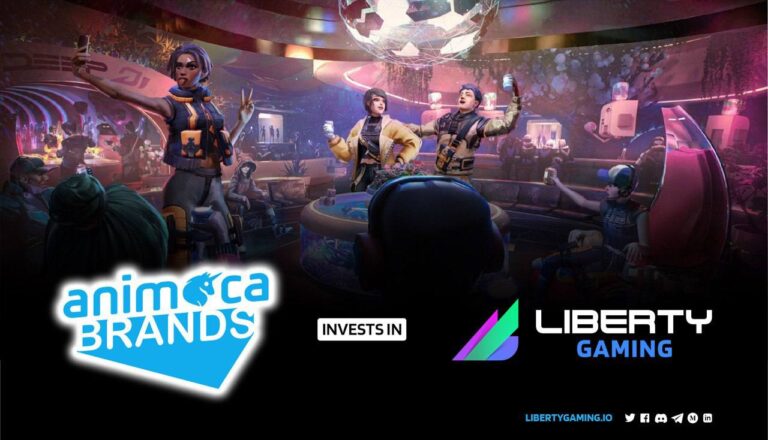
June 13th 2022, LONDON – Animoca Brands, Hong Kong-based game software company and venture capitalist, has become Liberty Gaming’s primary investor. Liberty Gaming is a leading GameFi ecosystem comprising a gaming community, a play-to-earn gaming guild, as well as an NFT and token fund. The investment will help Liberty Gaming further develop its platform, ecosystem, and community, positioning them as an influential force within the GameFi community as a whole.
Liberty Gaming is a gateway for gamers to access highly valued and often inaccessible NFTs required to partake in play-to-earn games. As a company dedicated to driving the evolution of GameFi, Liberty Gaming has invested in an incredible collection of the most promising play-to-earn games in the space, building up its NFT and crypto portfolio, as well as its community of scholars.
The GameFi organisation seeks to lower the entry barrier to participate for crypto-based players of all ages and backgrounds worldwide. It also aims to empower its scholars through training and educational programs on key topics like DeFi, CeFi, Crypto, and Blockchain, as well as establish a lively community for them with rewards and incentives. Furthermore, Liberty Gaming provides an ecosystem for gamers to improve their skills and prosper within the expanding play-to-earn gaming arena.
Liberty is focussing efforts on real-world partnerships with global organisations. This approach is already successfully underway through PERSIB, the biggest football club in Indonesia with 15 million fans. As a result, Liberty will be able to offer never-seen-before levels of exposure through co-branded PR, and growth investment opportunities within GameFi.
Animoca Brands is a leader in digital entertainment, blockchain, and gamification. It produces a diverse range of products, including the REVV and SAND tokens; original games such as The Sandbox, Crazy Kings, and Crazy Defense Heroes; and items based on popular intellectual rights such as Disney, WWE and Snoop Dogg.
The company consists of several subsidiaries, such as The Sandbox, Blowfish Studios, Quidd, GAMEE, and nWay. The Animoca Brands portfolio has over 200 investments in NFT-related enterprises and decentralised projects.
Regarding the partnership, Liberty Gaming CEO Thomas Caddick said, “To have an organisation as prestigious as Animoca Brands see the growing strength in our project to invest is a huge accolade and a great honour for us. The fact that Liberty Gaming is garnering this level of attention is proof in itself that we are building something special. The strength, expertise and resources Animoca Brands offers has the potential to bring hugely positive developments to Liberty Gaming”.
Yat Siu, the executive chairman and co-founder of Animoca Brands, commented: “The growth of Liberty Gaming from a play-to-earn guild into a fully-fledged GameFi organisation hints at its potential to expand the scope of blockchain gaming for many players. The company’s dual focus of early-stage GameFi investment and expanding the play-to-earn opportunities available to the gaming community demonstrate a strong commitment to mass adoption”.
About Animoca Brands
Animoca Brands is a global leader in gamification and blockchain with a large portfolio of over 200 investments in NFT-related companies and decentralised projects contributing to building the open metaverse. This investment from such a stellar name represents huge news for us here at Liberty Gaming and goes a long way to confirming that we are heading in the right direction and capturing attention from the biggest names in the space.
About Liberty Gaming
Liberty Gaming is a next-generation GameFi organisation comprising a gaming community, guild, launchpad and NFT & Token funds. Liberty’s sustainable group structure provides deep expertise in onboarding new games and facilitates higher yield by acquiring NFTs earlier and having greater allocations in emerging projects. Additionally, we provide superior characters, tools, armoury, and much more, creating financial freedom and success for our loyal community scholars.
The Liberty Gaming global network will offer projects exposure like no other due to the value opportunity presented to onboarded projects. Through this, Liberty will be able to provide unmatchable co-branded project PR opportunities and exposure to the web3 space in addition to a vast real-world audience, offering growth and investment opportunities as no other has seen before.
The team at Meme Kong is excited to introduce a new cryptocurrency with a mission to become king of all meme coins. The coin has been created by an enthusiastic and skilled group of enthusiasts who aim to change the standard for meme coins.
Meme Kong places a strong focus on community, both in the digital sphere and in the “real world”. Operating with integrity, transparency, and respect, Meme Kong offers a hybrid experience that delivers the best of both community and practical benefits for its users. Community members benefit from utilities that recognize the notoriety and status of each individual on the blockchain, as well as from an investment in the longevity of the coin.
Whereas most meme coins are short-term products based on hype, Meme Kong and Founder Chris Thomann want the coin to have real staying power. Meme Kong has already achieved impressive branding within the music industry, metaverse P2E game, and its own super Car Rally.
The team at Meme Kong recognizes the importance of factors such as social media, community engagement, and influencer-created hype for meme coins, but also understands that these things can be improved upon.
Some of the ways that Meme Kong has differentiated itself from other meme coins include:
A fully-doxxed Founder and Project Managers right from the start;
24/7 voice chat through Telegram for greater levels of communication, community engagement, and accountability;
implementing real utility and collaborating with large projects; and
an incentivized social engagement app with rewards and the chance to earn by playing a game.
Utilities offered by Meme Kong include a VC Launchpad, Metaverse integration, and multiple Play to Earn games.
Meme Kong Founder Chris has an extensive background in business, finance, and crypto. At just 20 years old, he became a successful stockbroker and has built multiple businesses over the last 20+ years, achieving success and growing a significant network of contacts in both traditional business and crypto spaces. The doxxed Meme Kong team counts as its members multiple talented, experienced, and skilled individuals who are all passionate and driven about making Meme Kong a community and the king of all meme coins. Operating around the world and in multiple time zones, the team keeps Meme Kong running 24/7.
Meme Kong has launched on the Ethereum network, making it accessible on the most well-known, established, and secure blockchain. One of the aims of the team is to bridge Meme Kong to multiple other safe and secure blockchains in the future, fulfilling the mission to ensure every Ape eats.
Find out more about Meme Kong on their website Memekong.io.
On Tuesday, cryptocurrency exchange Binance said it completed the first stage of airdropping new Terra Luna (LUNA) tokens to holders of Terra Luna Classic (LUNC), TerraUSD (USTC), and AnchorUST (aUST).
The distribution was based on “pre-attack” and “post-attack” snapshots of token holders taken at LUNC block height 7,544,910 at 14:59:37 on May 7, 2022 UTC and block height 7,790,000 at 16:38:08 on May 26, 2022 UTC, respectively. As told by Binance, users received new LUNA tokens based on the compensation scheme outlined by Terra developers:
Pre-Attack 1 aUST = 0.01827712143 LUNA
Pre-Attack 1 LUNC = 1.034735071 LUNA
Post-Attack 1 USTC = 0.02354800084 LUNA
Post-Attack1 LUNC = 0.000015307927 LUNA
At the pre-attack time, one aUST had a value of $1.24 while one LUNC was worth approximately $75. At the post-attack time, one USTC and one LUNC were worth $0.0632 and $0.0001434, respectively. At the time of publication, each LUNA token is worth $9.25. Regardless of timestamp, approximately 30% of LUNA tokens were distributed on the spot, while the remaining 70% will be distributed monthly in a vesting schedule starting later this year, in accordance with Terra’s reformation plan.
Additionally, users who staked their USTC via Binance Staking pre-attack were also eligible for the airdrop. As it turns out, users’ USTC assets were staked on-chain, with aUST as the yield-bearing token. Binance launched USTC staking only a month prior and ended the program shortly after the implosion of the Terra Luna Classic ecosystem.
Despite the successful airdrop on Binance, it appears that the token distribution did not go as smoothly as expected for crypto enthusiasts holding Terra assets in self-custodial wallets. Terra developers said that some users received less LUNA from the airdrop than expected and are actively working on a solution. The same day, a LUNC pricing error appears to have caused another exploit that potentially drained Mirror protocol, which is built on Terra, of all its funds.
Pseudonymous Shiba Inu (SHIB) founder ‘Ryoshi’ has walked away from the community after deleting all of their Tweets and blog posts this week.
Much like Bitcoin (BTC) founder Satoshi Nakamoto, Ryoshi’s identity has remained unknown since the project launched in August 2020. Additionally, they have also held a hands-off approach to the memecoin much like Dogecoin (DOGE) founders Billy Markus and Jackson Palmer.
Lead developers such as ‘Shytoshi Kusama’ have stated that the project will carry on and continue to “actualize Ryoshi’s vision and plan for this grand experiment” of building a decentralized memecoin ecosystem.
Ryoshi has hinted on several occasions that they would eventually walk away, as they often played down their significance and role in Shiba Inu. In a since-deleted Medium post, the founder reportedly said:
“I have said from the beginning, I am a nobody, I am not important. The efforts to unmask my “identity” even if successful would be underwhelming. I am just some guy of no consequence tapping at a keyboard and I am replaceable. I am Ryoshi.”
As it stands, Ryoshi’s Twitter account is still up but with all activity wiped clean, while two blog posts bidding farewell to the ShibArmy are still up on Medium. However, some members have suggested that these posts may be from a scammer who created a new account under Ryoshi’s name.
The idea appears plausible, as previous reports linking to Ryoshi’s blog now bare the message “user deactivated or deleted their account,” despite another account being up using his same name and profile picture.
“I am not important, and one day I will be gone without notice. Take the SHIBA and journey upwards frens,” the first post reads, while the second one adds “Every Shibarmy is Ryoshi. It does not represent someone, but the glory of Shibarmy! END.”
Regardless of the potential tom-foolery on Medium, Shytoshi Kusama published a blog post on May 31, saying goodbye to Ryoshi and reiterating a commitment to the founder’s vision for the project moving forward:
“The ethos of Ryoshi to remain anonymous and have no input on the direction of Shib, makes our mythos even more mystic and impressive. We’ve built from nothing, never paid an exchange for a listing, and revolutionized “meme” tokens by growing exponentially.”
“Shib, Leash, Bone, Treat, ShibaSwap, Shi, Shibarium. Note also the concept of LOCAL Shib areas (meetups) such as we see in ShibaZone, and eventually Shibacon. To me, these latter two aspects are part of our growth, and all of our other projects support or utilize one or more of the above,” the post added.
Notably, the news hasn’t negatively impacted the price of SHIB, with the memecoin gaining 3.1% over the past 24 hours to sit at roughly $0.00001209.
While the asset is down a hefty 86% since its all-time high of $0.00008616 in late October 2021, somehow SHIB is still up 54% overall compared to 12 months ago, which is something that has not been replicated across many major assets.
Ripple (XRP) has announced a $100 million investment in the carbon trading segment, CEO Brad Garlinghouse told Cointelegraph’s Joseph Hall in an interview on the sidelines of the World Economic Forum (WEF) Annual Meeting, which concluded on Thursday.
Garlinghouse noted the rising profile of cryptocurrency at the international summit, comparing his experiences over the last several years. “As leaders across the world learn how these technologies can actually benefit their constituents, benefit their economies, they’re going to use them. […] I think we’re seeing that happen every day,” Garlinghouse said.
He went on to say that nonfungible tokens (NFTs) are “underhyped, in spite of the fact that there’s obviously a lot of hype in parts of the NFT market.” Specifically:
“The tokenization of various assets is underhyped.”
Garlinghouse cited carbon credit trading, which is often “challenged” by fraudulent activity, as a use case for tokenization due to its transparency and traceability. “It could really revolutionize carbon credit marketplaces, the efficacy of carbon credit marketplaces,” Garlinghouse said. Ripple is investing $100 million in the segment, he added.
Cryptocurrency will have some real use cases in 2022, Garlinghouse continued. Cross-border transactions are one such example that Ripple is working on. Currently, cross-border transactions are “usually quite slow, quite expensive and frankly very error-prone,” while the XRP chain has been “a very efficient, low-cost bridge,” he said.
“I don’t think we’re living in a single-chain world,” Garlinghouse said. “It’s a multi-chain world, there’re going to be a lot of different utility use cases.” Ripple will continue to focus on enterprise, but other cryptocurrency foundations are looking at consumers use cases as well, he explained.
The full conversation is on our YouTube channel. Be sure to subscribe!
The price of LUNA has tanked around 70% since the re-launch of the Terra ecosystem via Terra 2.0 on May 28.
Under the revival plan of Terraform Labs founder Do Kwon, new LUNA tokens (also referred to as LUNA 2) are being airdropped to investors that previously held Luna Classic (LUNC), TerraUSD Classic (USTC), and Anchor Protocol UST (aUST).
The only reason to buy $LUNA 2.0 is to qualify for the next airdrop of $LUNA 3.0 after it goes to zero like $LUNA 1.0
According to data from CoinGecko, LUNA has dropped roughly 69% since its opening of $18.87 on Saturday to sit at around $5.71 at the time of writing.
LUNA/USD chart: CoinGecko
At this stage, the sharp plummet seems to suggest a relative lack of faith in Do Kwon’s revamp moving forward, with many investors indicating on Twitter that they are instead looking to recover a small portion of their previously lost capital and wipe their hands clean of the project.
Sold my available LUNA 2.0 airdrop → ETH @ $1,790.
I don’t see any fundamental here & I see whatever I get as bonus since I already wrote everything off as a loss & $0.
If not that the others are vesting, I’ll sell ‘em all.
Binance is set to begin a multi-year distribution of LUNA to eligible users starting from May 31, along with listing the token for trading via its Innovation Zone, a dedicated trading zone for volatile and high-risk assets.
Some people in the community who have outlined plans to eventually purchase LUNA once the carnage is over such as “lurkaroundfind” have predicted further bloodshed once the Binance drop goes live.
They pointed out that Binance has “15.7MM liquid LUNA, which will be available to users on Tuesday” and suggested that investors who mainly used the Anchor Protocol will look to cash out as they have no real interest in the Terra ecosystem.
Crypto volatility is nerve-wracking, and it may not be over yet. The turmoil may make crypto investors and crypto-related businesses less enthusiastic than when prices seemed ever to be climbing. With the market falling off a cliff, there will be big losses to claim on your taxes, right? Not necessarily. As your United States dollars shake out in the digital world, it is worth asking whether there is any lemonade you can make by claiming losses on your taxes.
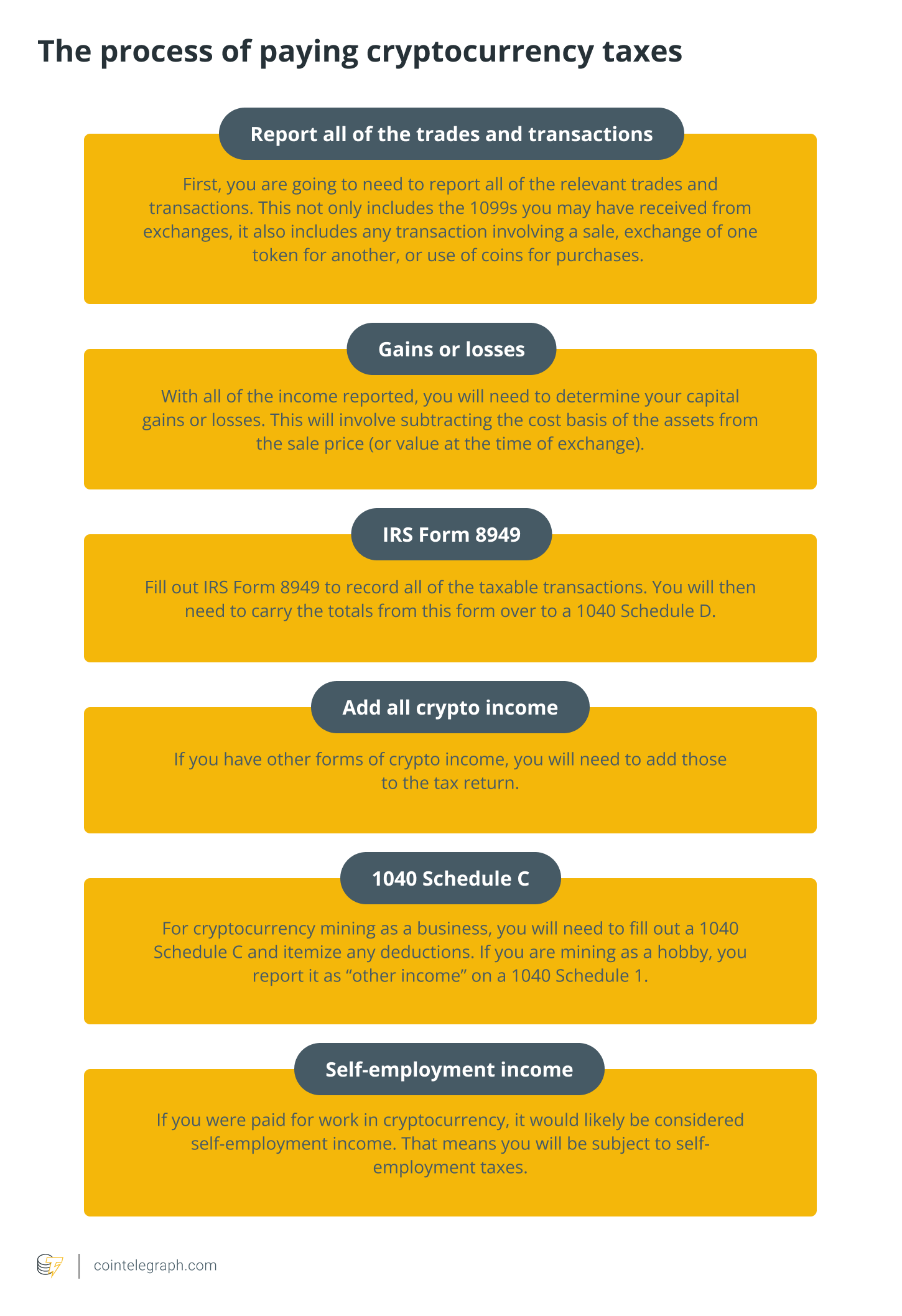
First, ask what happened from a tax viewpoint. If you’ve been trading and triggering big taxable gains, but then the floor drops out, first consider whether you can pay your taxes for the gains you have already triggered this year. Taxes are annual and generally based on a calendar year unless you have properly elected otherwise. Start with the proposition that each time you sell or exchange a cryptocurrency for cash, another cryptocurrency, or for goods or services, the transaction is considered a taxable event.
That is a result of the U.S. Internal Revenue Service’s shot heard ‘round the world in Notice 2014-21 when the IRS announced that crypto is property for tax purposes. Not currency, not securities, but property, so most any transaction means the IRS wants you to report gain or loss.
Before 2018, many crypto investors claimed that crypto-to-crypto exchanges were tax-free. But that argument was based on section 1031 of the tax code. It was a good argument, depending on the facts and the reporting. But that argument went away starting in 2018. Section 1031 of the tax code now says it applies to swaps of real estate only.
The IRS is auditing some pre-2018 crypto taxpayers and, so far, doesn’t appear to like the 1031 argument, even before 2018. The IRS even released one piece of guidance saying that tax-free crypto exchanges don’t work. We may need a court case to resolve it if the IRS pushes it that far. After all, it only applies to 2017 and prior years, so it’s of diminishing importance.
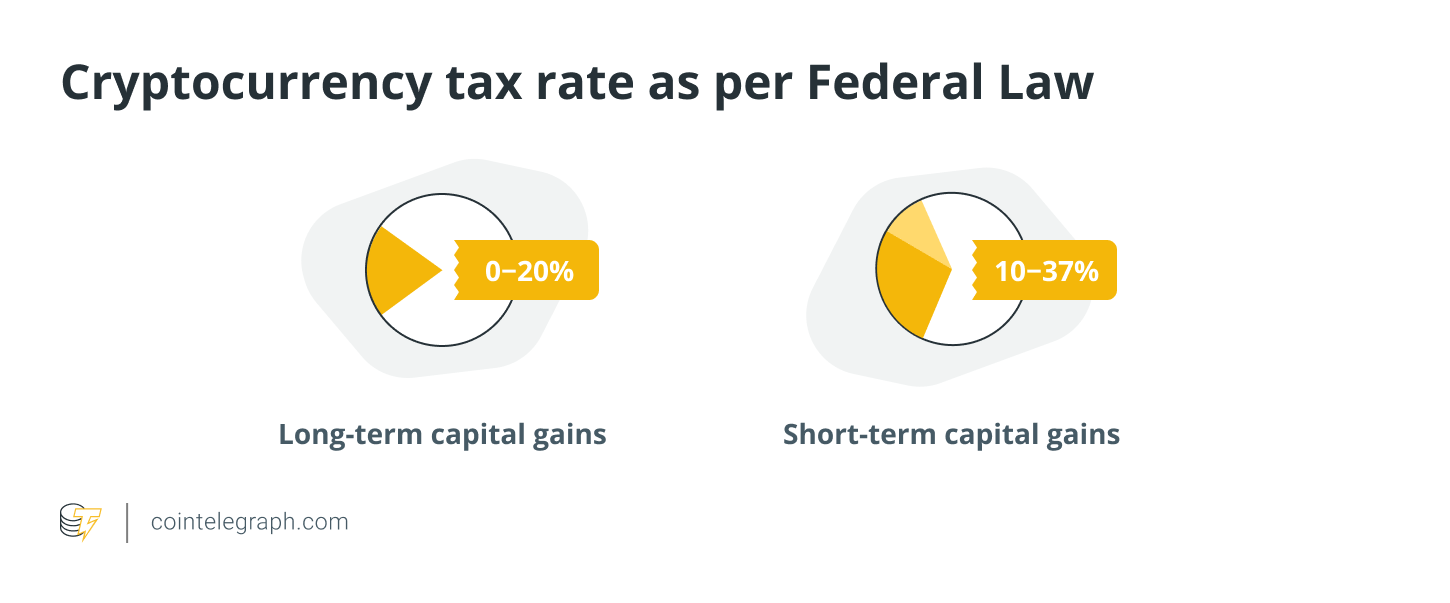
But regardless of whether you use crypto to pay someone, swap crypto, or outright sell it, do you have gains or losses? For most people, gains or losses would be subject to short-term or long-term capital gains/losses based on the basis (what you paid for the crypto), holding period, and the price at which the cryptocurrency was sold or exchanged. Yet some people may have ordinary gains or losses, and that topic is worth revisiting. Are you trading in crypto as a business?
Most investors want long-term capital gains rates on gains if they buy and hold for more than a year. However, ordinary income treatment could be helpful for some, at least for losses. Securities traders can make a section 475 mark-to-market election under the tax code, but does that work for crypto? It’s not clear. To qualify, one must argue that the crypto constitutes securities or commodities.
The U.S. Securities and Exchange Commission has argued that some cryptocurrencies are securities, and there may be arguments for commodity characterization, too. It’s at least worth considering in some cases. However, in addition to establishing a position that a digital currency is a security or commodity, you would need to qualify as a trader in order to make a mark-to-market election. Whether one’s activities constitute “trading” as opposed to “investing” is a key issue in determining whether one is eligible to make a mark-to-market election.
The IRS lists details about who is a trader, usually characterized by high volume and short-term holding, although sometimes investing and trading might look rather similar.
If crypto turns out to be eligible for mark-to-market and if you qualify and elect it, you could mark to market your securities or commodities on the last business day of the year. Any gain or loss would be ordinary income, and gains, too. A benefit would be that the cumbersome process of tracking the date and time that each crypto was acquired and identifying the crypto you sold would not be required.
For most people, this election, if available, likely won’t make any sense, but as with so much else in the crypto tax world, much is uncertain. In the past, some drops in crypto value have been called a “flash crash,” an event in electronic securities markets where the withdrawal of stock orders rapidly amplifies price declines, and then quickly recovers. In the case of stock, the SEC voted on June 10, 2010, to enact rules to automatically stop trading on any stock in the S&P 500 whose price changes by more than 10% in any five-minute period.
A stop-loss order directs a broker to sell at the best price available if the stock reaches a specified price. Some people use the same idea with crypto. Some even want to buy the crypto back after a sale, and with crypto, you can do that. In contrast, with stock, there are wash sale rules, which restrict selling (to trigger losses) and buying back stock within 30 days. There are no wash sale rules for crypto, so you can sell your crypto and buy it right back without a 30-day waiting period.
This article is for general information purposes and is not intended to be and should not be taken as legal advice.
The views, thoughts and opinions expressed here are the author’s alone and do not necessarily reflect or represent the views and opinions of Cointelegraph.
Robert W. Wood is a tax lawyer representing clients worldwide from the office of Wood LLP in San Francisco, where he is a managing partner. He is the author of numerous tax books and frequently writes about taxes for Forbes, Tax Notes and other publications.
Behind the scenes, the whisper of regulation is getting louder. Did anyone notice that all the Know Your Customer (KYC) requirements have been laid on smaller centralized exchanges in exotic locations over the past two months? That was the canary in the coal mine. With the aforementioned designation and cooperation, DEXs will start to feel regulator heat soon.
Yes, regulations are coming, and the main reason why DEXs will hardly survive the coming storm is their proclaimed lack of ability to identify the users using and contributing to liquidity pools. In conventional financial circles, rendering services without proper KYC procedures is a big no-no. Not tracking identity allowed Russian oligarchs to use the Hawala payment service to anonymously move millions of dollars leading up to the war in Ukraine, so regulators are justifiably concerned about DEXs. For most DEX enthusiasts, KYC sounds like an insult, or at least, something that a DEX is fundamentally incapable of doing. Is that really the case, though?
Let’s start with the anatomy of a DEX, and we’ll find that they aren’t even as decentralized as one may think. Yes, DEXs run on smart contracts, but the team or person that uploads the code on-chain usually gets special admin-level privileges and permissions. Additionally, a known, centralized team usually takes care of the front end. For example, Uniswap Labs recently added the ability to scrub known hacker wallets, removing tokens from their menu. While DEXs claim to be pure code, in reality, there is still a more-or-less centralized developer team behind this ethereal entity. This team also takes in any profits to be made.
Furthermore, an in-depth look at the way users communicate with permissionless chains reveals more centralized choke points. For example, last month, MetaMask was unavailable in a few regions. Why? Because Infura, a centralized service provider that the on-chain wallet relies on for an Ethereum API, decided so. With a DEX, things can always play out in a similar way.
Some people say that DEXs are more decentralized by virtue of being open source, meaning any community is free to fork the code and build their own DEX. Sure, you can have as many DEXs as you want, but the question is about which ones manage to bring more liquidity to the table, and where users actually go to trade their tokens. That is, after all, what exchanges are for in the first place.
From a regulatory standpoint, an entity facilitating such trades can be seen as a “broker” or a “transfer agent” regardless of whether it is open source or not. That is where most regulations are heading. Once identified as such, DEXs will take major fire unless they can comply with a wide array of requirements. These would include getting a license, verifying user identities and reporting transactions, including suspicious ones. In the U.S., they would also have to comply with the Bank Secrecy Act and freeze accounts upon request from the authorities. Without all of that, DEXs are likely to go under.
The identity-and-KYC issue
Since DEXs claim they are decentralized, they also claim that they are technologically incapable of implementing any identity verification or KYC controls. But in truth, KYC and pseudonymity are not mutually exclusive from a technological standpoint. Such an attitude reveals, at best, laziness or an unhinged push for lower costs, and at worst, a desire to profit from dirty money being moved around.
Arguments that a DEX is unable to do KYC without creating a honeypot of personal information lack technical merit and imagination. Multiple teams are already building identity solutions based on zero-knowledge proofs, a cryptographic method that allows one party to prove it has certain data without revealing that information. For example, proof of identity can include a green checkmark that the person has passed the KYC, but does not reveal personally identifiable information. Users can share this ID with a DEX for verification purposes without the need for a centralized repository of information.
Since their users don’t have to pass a KYC, DEXs become part of the puzzle when it comes to ransomware: Hackers use them as a major hub for moving bounty. Due to the lack of ID verification, DEX teams are unable to explain the “source of funds,” meaning they can’t prove the money doesn’t come from a sanctioned territory or from money laundering. Without this proof, banks will never issue a bank account for DEXs. Banks require information on the origins of funds so they don’t get fined or have their own license revoked. When DeFi can easily be used for criminal activity, it makes a bad name for crypto and pushes it further away from mainstream adaptation.
DEXs also have a unique and single-purpose suite of software, Automated Market Making or AMM, which allows liquidity providers to match with buyers and sellers, and pull in or determine a price for a given asset. This is not general-purpose software that can be leveraged for multiple use cases, as is the case with BitTorrent’s P2P protocol, which moves bits quickly and efficiently for Twitter, Facebook, Microsoft and video pirates. An AMM has a single purpose and produces a profit for teams.
Verifying user identities and checking that money and tokens are not illegal helps ensure some level of protection from cybercrime. It makes DeFi safer for users and more feasible for regulators and policymakers. To survive, DEXs will have to eventually admit this and adopt a level of identity verification and prevention of money laundering.
By implementing some of these solutions, DEXs can still deliver on the promise of DeFi. They can remain open for users to contribute liquidity, earn fees, and avoid relying on banks or other centralized entities while remaining pseudonymous.
If DEXs choose to ignore the regulatory pressure, it can end in one of two ways. Either more legitimate platforms can continue to adapt to growing government scrutiny and rising demand in crypto from more mainstream investors, who require usability and security, thereby leaving stubborn DEXs to die, or alternatively, unadaptable DEXs will move into the gray market of far-flung jurisdictions, tax havens and unregulated cash-like economies.
We have every reason to believe the former is a much likelier scenario. It’s time for DEXs to grow up with the rest of us or risk being regulated to death along with the shadier ghosts of crypto’s past.
This article does not contain investment advice or recommendations. Every investment and trading move involves risk, and readers should conduct their own research when making a decision.
The views, thoughts and opinions expressed here are the author’s alone and do not necessarily reflect or represent the views and opinions of Cointelegraph.
Bob Reid is the current CEO and co-founder of Everest, a fintech company that leverages blockchain technologies for a more secure and inclusive multi-currency account, digital/biometric identity, payment platform and eMoney platform. As a licensed and registered financial institution, Everest supplies end-to-end financial solutions, facilitating eKYC/AML, digital identity and regulatory compliance associated with money movement. He was an advisor to Kai Labs, the general manager of licensing at BitTorrent, and vice president of strategy and business development at Neulion and DivX.